Emerging Channels: Video, Snippets, and Interactive Results
Research outputs are changing. Final reports are no longer the only deliverable that matters.
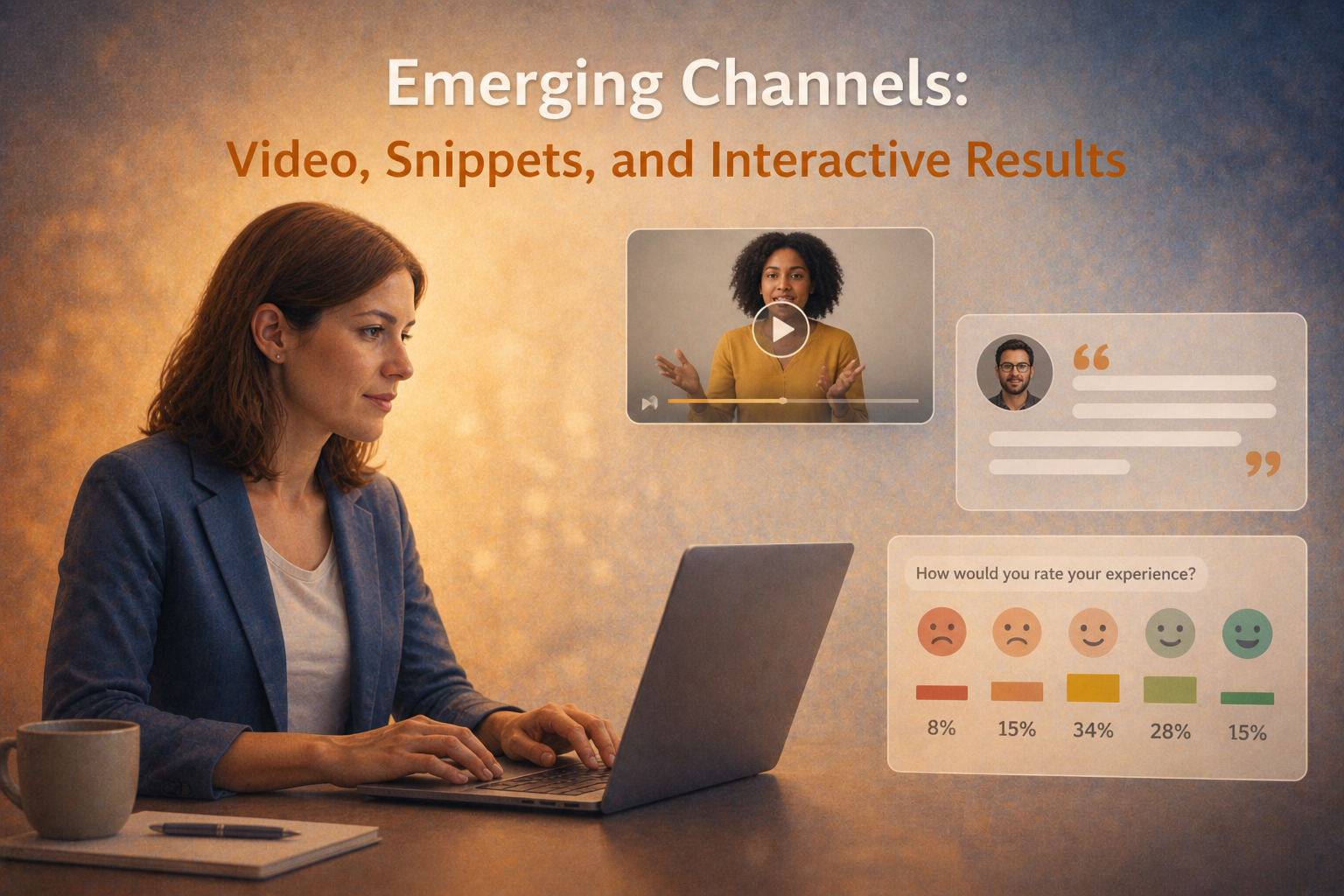
Teams now share insight through short video summaries, clipped quote reels, social-ready snippets, interactive dashboards, clickable storyboards, and market-specific result views. That’s good news for accessibility and engagement. It’s also where translation and QA can become more complicated very quickly.
A deck can be translated one slide at a time. A video summary or interactive result set behaves differently. Reading speed matters. Filter states matter. On-screen density matters. The order in which users explore content matters. And if you’re publishing in multiple languages, all of that affects how well the message survives.
Why these newer formats need a different approach
Traditional research translation often assumes fixed content in a linear format. Emerging channels break that assumption.
A short insight video has narration, captions, on-screen text, charts, and sometimes branded motion graphics. An interactive dashboard may have live labels, hover states, filters, export options, and dynamic views. Even a small social snippet can combine headline, quote, visual, and disclaimer in ways that leave very little room for expansion.
That changes what “good translation” looks like. It’s not only about linguistic accuracy. It’s about whether the format still works once the language changes.
Short video is powerful, but tightly constrained
Video is becoming more common in research communications because it travels well internally and externally. It can bring findings to life, make insights easier to share, and increase the reach of key messages. But it also introduces some of the tightest localisation constraints.
Subtitles are often the first choice because they’re faster and more cost-effective than voice-over. In many cases, they’re enough. But subtitles only work if reading speed and on-screen density are controlled. A subtitle can be linguistically correct and still fail because it appears too fast, competes with important visuals, or contains more information than viewers can reasonably absorb.
Voice-over becomes more useful when the message is emotionally important, highly branded, or too dense for subtitles to carry comfortably. But it brings its own decisions around tone, casting, timing, and script adaptation.
The point isn’t that one method is always better. It’s that output format changes the translation brief.
Interactive results bring a different QA challenge
Interactive dashboards and results portals create another layer of risk. Unlike static reports, they aren’t always read in a fixed order. Users click, filter, sort, export, and move through different pathways. That means QA can’t stop at visible labels.
You also need to check filter states, chart truncation, tooltip behaviour, exports, mobile views, and whether localised terms remain consistent across every branch of the experience. If one state is translated cleanly but another is missed, the end result feels unreliable even when most of the content is correct.
This matters even more in right-to-left environments. Arabic and Hebrew interfaces can expose layout assumptions very quickly, particularly in charts, navigation, and data tables. If the UI was only tested in English, issues may appear late and expensively.
Consistency matters more across channels and video content, not less
When research outputs multiply, terminology discipline becomes more important.
If the core insight is described one way in the dashboard, another way in the video summary, and a third way in the infographic snippet, audiences begin to lose trust. This doesn’t always happen because the translators are inconsistent. Often it happens because each format is handled separately and the team never aligns the language across them.
A stronger approach is to establish core approved phrasing before localisation begins. Key finding labels, repeated metrics, market names, callouts, and brand-sensitive wording should travel consistently across channels, even when the format changes.
Planning a pilot sensibly
If your team wants to test newer output types next quarter, start small.
Choose one insight story and one or two target formats. Define the audience first. Is this for internal stakeholders, clients, or external sharing? Then decide what the format needs to do. A short video may be better for narrative summary. An interactive dashboard may be stronger for exploration. A clipped quote reel may be enough for highlighting respondent voice.
Then localise with the format in mind. Keep subtitle density manageable. Check voice-over tone against brand expectations. Test interactive paths, not just visible screens. And review on the device types people will actually use.
New formats need new QA habits
Emerging research channels create real opportunities, but they reward planning. The message now lives in motion, interaction, and compressed formats as much as in documents. That means translation and QA need to adapt too.
Keep terminology consistent, match the output to the audience, test interactive states properly, and don’t assume a format that worked in English will behave the same way in every language.
Working with a high-quality language partner can help you make sure your video, interactive, and multi-format outputs hold together across all your markets, before issues show up in front of clients or stakeholders.
If you’re testing video, interactive dashboards, or other new research outputs, contact us at info@one-global.com to make sure your content works clearly, consistently, and credibly in every language and format.